

“Surgery is not just about performing procedures — it’s about knowing when to act and being fully prepared when you do.”
Completing post-graduation in Surgery means something. It’s a career-defining moment — but more than that, it’s the point where academic knowledge meets genuine clinical responsibility. The stakes are real, and so is the pressure.
The shift to the Objective Structured Clinical Examination format has changed how practical exams work, and how students need to prepare for them. OSCE now holds significant weight in DNB and MS practical assessments. It doesn’t just test what you know — it tests how you think, how you communicate, and how well you hold up when an examiner is watching the clock. Yet most students prepare without a structured plan, often relying on resources that weren’t really built for this format.
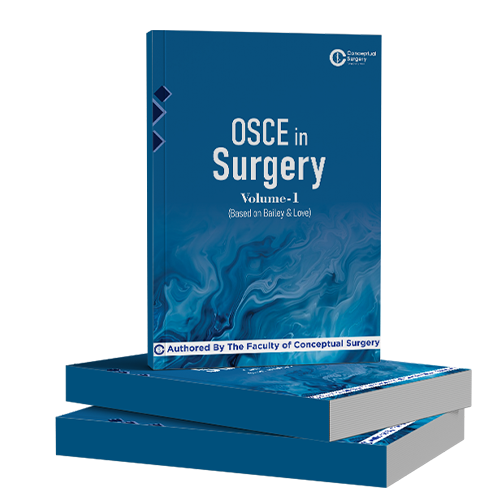
OSCE in Surgery – Volume 1 was put together specifically for this. The topics covered are high-yield and exam-relevant, the stations reflect what actually comes up, and the approach throughout is built to give you clarity and structure — not more to memorize.
Nail the concepts before anything else. OSCE examiners move fast. If your understanding of core surgical topics isn’t solid, it shows, quickly. Start there, and don’t rush past the fundamentals.
Develop a station-by-station approach. Every OSCE station has a rhythm to it. Practicing a consistent, step-by-step method means your answers will feel organized and deliberate rather than improvised. =
Understand the examiner’s lens. Knowing the right answer is only half the job. Delivering it, with the right terminology, in a logical sequence, without rambling, is what earns marks. Learn to be precise.
Repetition builds composure. The confidence you see in strong OSCE candidates isn’t innate. It’s practiced. The more you work through stations, the more natural the whole process feels under pressure.
Be selective with revision. Trying to revise everything equally is a losing strategy. Identify the high-yield topics, revisit them often, and make sure those areas are genuinely locked in.
Use discussion as a learning tool. Reading alone only gets you so far. Talking through cases with peers or asking for feedback from mentors surfaces blind spots that self-study often misses entirely.
Exclusively for Conceptual Surgery Premium Subscribers